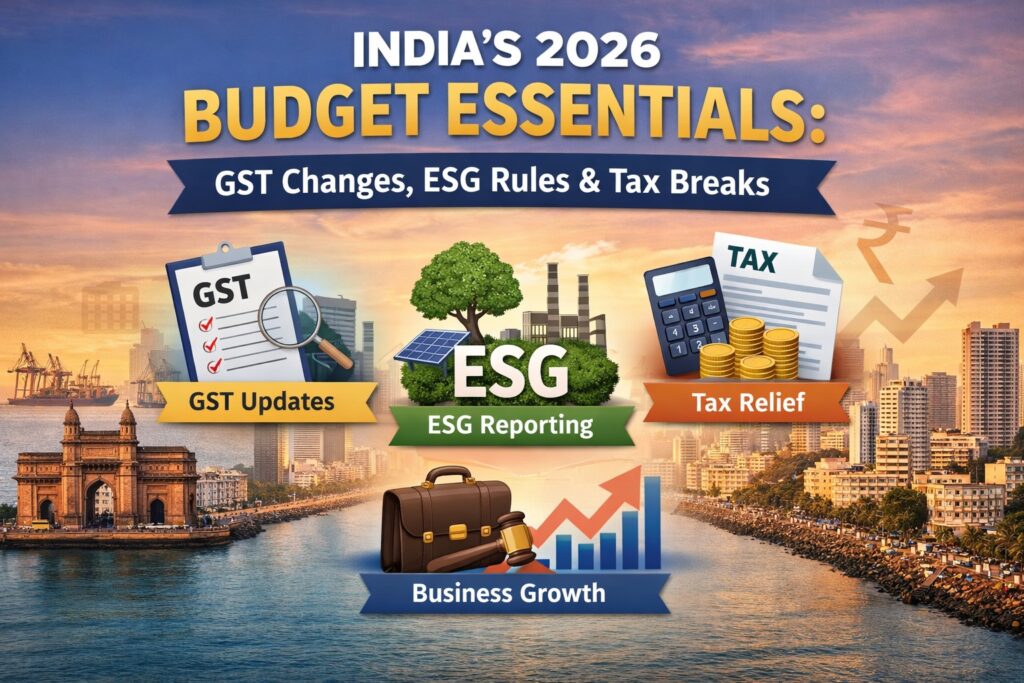
GST Changes in Budget 2026 for Mumbai Businesses
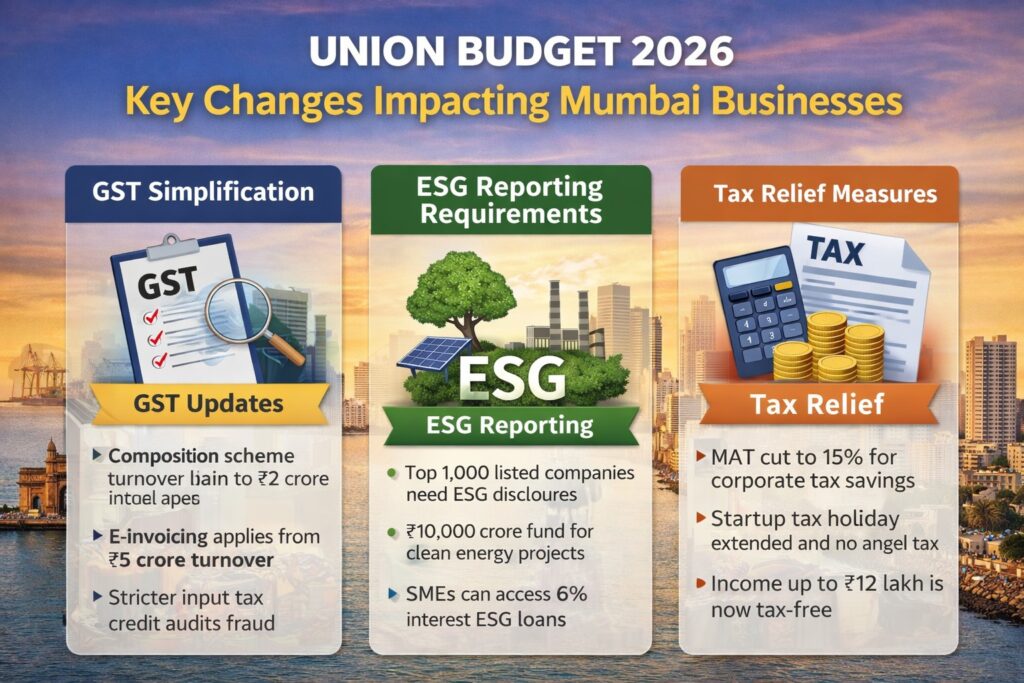
GST rules got user-friendly tweaks. Businesses with turnover up to ₹2 crore in most states qualify for the composition scheme, meaning fewer returns and simpler filings. E-invoicing now starts at ₹5 crore turnover threshold, reducing errors and speeding up refunds.
TCS on overseas education and travel drops to 5%, helping families and startups manage cash better. Stricter checks on input tax credits target fake invoices via automated systems. Exporters see faster processing for zero-rated supplies.
Action tip: Switch to auto-populated GSTR forms. Prepare for audits in sectors like real estate. Maintain digital records for quick compliance.
ESG Reporting Basics
ESG covers Environment, Social, and Governance practices. From FY 2026-27, top 1,000 listed companies must disclose data on emissions, water use, employee welfare, and ethical boards. A ₹10,000 crore Green Fund backs solar, EVs, and clean tech. SMEs access 6% interest loans for upgrades. Non-followers face fines up to 2% of revenue.
For Mumbai industries like shipping and textiles, track Scope 1-3 emissions first with basic tools. Report workforce diversity (target 30% women) and anti-corruption steps. Banks prioritize ESG in loan approvals, giving compliant firms an edge.
Final applicability depends on government notifications and circulars issued after the Budget.
Tax Relief Measures
Corporate Minimum Alternate Tax (MAT) lowers to 15%, saving companies billions annually. Startups extend their three-year tax holiday. Angel tax on investments ends completely.
Personal taxes improve: 5% slab from ₹3-6 lakh, standard deduction to ₹75,000, and extra rebates for seniors. Crypto gains stay at 30% tax, but TDS cuts to 0.1%.
Shift focus from disputes to planning. File ITRs by July 31 using pre-filled data and matching tools.
Practical Steps for Mumbai Businesses
Mumbai businesses face faster compliance due to high GST collections and growing ESG focus. Ports, factories, and service companies must act quickly to manage GST changes, ESG reporting, and tax updates without increasing costs or risks.
- Assess turnover: Check annual turnover to see if composition scheme eligibility applies under updated GST rules.
- Collect ESG data: Gather energy bills, employee records, and safety data needed for ESG disclosures.
- Update ledgers: Modify accounting records to reflect new tax deductions and compliance changes.
- Upskill teams: Enroll staff in free online skill courses for GST, ESG, and compliance awareness.
- Use software: Adopt affordable compliance software for tracking GST returns and ESG data efficiently.
- Seek local support: Engage Mumbai-based CA or CS firms offering bundled services at reasonable costs.
Early action helps Mumbai businesses stay compliant, reduce risks, and save long-term costs.
Overcoming Common Challenges
Mumbai businesses often face high ESG setup costs of ₹5–10 lakh, though government grants can cover up to 50%. Automated GST alerts may flag genuine claims, so keeping proper backups is essential. CA and CS firms can offer Budget Compliance Packs starting at ₹50,000, highlighting returns like faster refunds and smoother compliance. Businesses should also monitor expected interest rate cuts to reduce borrowing costs.
Why Act Today
This budget blends expansion with responsibility. GST simplifies routines, ESG attracts investors, and tax relief drives spending. Mumbai CAs gain from rising demand for advice.
Businesses should consult a Mumbai-based CA or CS to assess Budget 2026 impact and compliance timelines.
Visit official budget sites for forms. Deadlines hit April 2026—start now for smooth sailing.