Employee Stock Option Plan (ESOP) – Meaning, Taxation, Process & Benefits
What is an Employee Stock Option Plan (ESOP)?
An Employee Stock Option Plan (ESOP) is a compensation tool that gives employees the right to purchase shares of their company at a predetermined price after a specified period.
In simple terms:
Your company gives you an option today → you can buy its shares later at a fixed price → if the company grows, you benefit.
Legal Framework in India
ESOPs in India are governed by:
- Companies Act, 2013
- Securities and Exchange Board of India (for listed companies)
Key Terms in ESOP
1. Grant Date
The date on which the company grants stock options to employees.
2. Exercise Price
The fixed price at which employees can buy shares in the future.
3. Vesting Period
The time employees must wait before they can exercise their options.
4. Exercise Date
The date when employees actually purchase the shares.
5. Lock-in Period (if applicable)
Period during which shares cannot be sold after purchase.
How ESOP Works
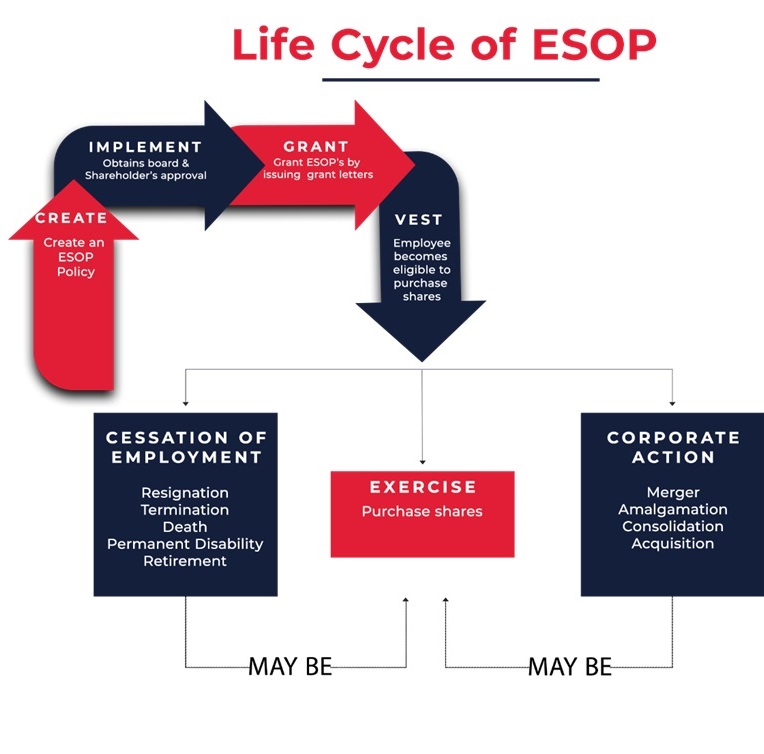
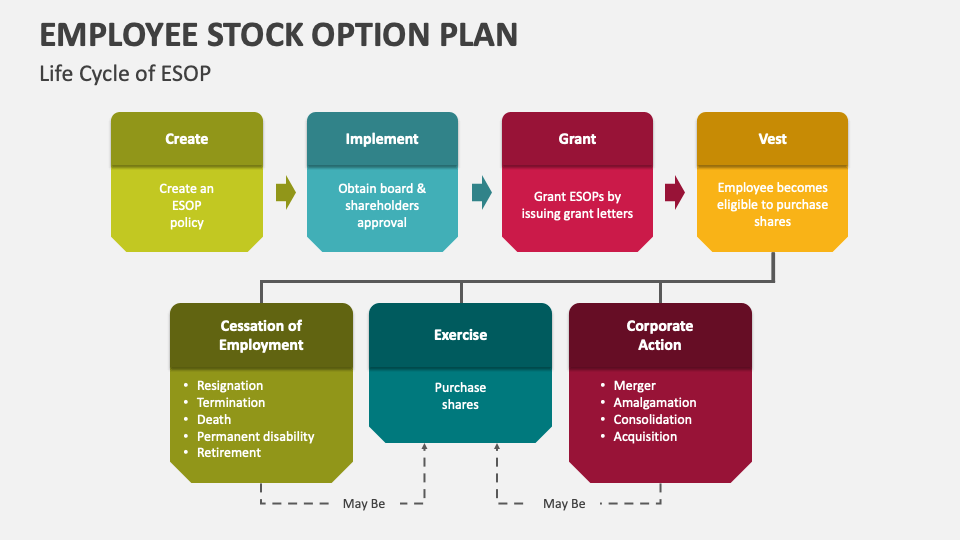

- Company grants stock options to employees
- Options vest over a period (e.g., 4 years)
- Employee exercises the option at a fixed price
- Shares can be held or sold (depending on rules)
Taxation of ESOP in India
ESOP taxation happens in two stages under the Income Tax Act, 1961:
1. At the Time of Exercise
- Difference between:
- Fair Market Value (FMV)
- Exercise Price
This difference is taxed as perquisite (salary income).
2. At the Time of Sale
- Capital gains tax applies on:
- Sale price – FMV at exercise
Types:
- Short-term capital gains (STCG)
- Long-term capital gains (LTCG)
Example
- Exercise price = ₹100
- Market value at exercise = ₹300
- Sale price = ₹500
Tax treatment:
- ₹200 (300 – 100) → taxed as salary
- ₹200 (500 – 300) → taxed as capital gain
Benefits of ESOP
1. Wealth Creation
Employees benefit from company growth.
2. Ownership Mindset
Employees feel like stakeholders, not just workers.
3. Retention Tool
Vesting period encourages long-term association.
4. Startup Compensation Strategy
Helps startups attract talent without high salaries.
Who Should Consider ESOPs?
- Employees in startups or growing companies
- Individuals willing to take moderate to high risk
- Employees with a long-term outlook
Risks of ESOP
- Company valuation may not increase
- Shares may not be liquid (especially in startups)
- Tax liability arises even before actual cash gain
- Lock-in restrictions may apply
Special Provision for Startups
Eligible startups (as per government recognition) may get deferred taxation on ESOPs, subject to conditions.
Key Points to Remember
- ESOP is a right, not an obligation
- Tax applies at both exercise and sale stage
- Valuation plays a critical role
- Liquidity is important before exercising
Conclusion
Employee Stock Option Plans (ESOPs) are a powerful tool for both companies and employees—aligning incentives, enabling wealth creation, and driving long-term commitment. However, understanding tax implications and risks is essential before exercising options.